8 min read
How to Keep a School Clean: Toilets, Sickness Bugs, Spills and Holiday Deep Cleans
How to keep a school clean: toilet hygiene, sickness bugs, vomit spill kits, classroom routines and what a school holiday deep clean should include.
Our earlier guide to school cleaning services looked at the bigger picture: safeguarding, Ofsted and how schools and trusts buy cleaning. This guide is about the day to day. It answers the questions school business managers, site teams and nursery managers search for most, from how to keep school toilets clean to what to use when a child is sick in a classroom.
The short answer
- Write it down. A cleaning schedule should say what is cleaned, how often and who does it, with daily, weekly and holiday tasks.
- Clean the touch points most. Door handles, toilet flushes, taps and shared surfaces carry the most germs.
- Use detergent and water for routine cleaning, and save disinfectant for toilets, food areas and spills of body fluids.
- Colour code your equipment so toilet cloths and mops never reach a classroom or kitchen.
- Keep a spill kit ready for vomit, urine and blood, and make sure staff know how to use it.
- Plan the big jobs for the holidays, when floors can be stripped and polished and washrooms descaled with no pupils on site.
- Name someone to check standards and give staff a simple way to report problems.
Much of this comes from the UK Health Security Agency (UKHSA) guidance for schools and childcare settings, Health protection in children and young people settings, which applies whether your cleaning is done in house or by a contractor.
What cleaning does a school actually need?
UKHSA says cleaning with detergent and water is normally all that is needed, because it removes most of the germs that cause illness. Disinfecting matters where surfaces come into contact with food, dirt or body fluids. The same guidance says a comprehensive cleaning contract should include daily, weekly and periodic cleaning schedules, so here is what each one usually covers.
Every day
- Toilets and washrooms cleaned, with soap, paper towels and toilet paper checked
- Classroom desks, tables and shared surfaces wiped
- Door handles, light switches, taps, toilet flushes and push plates cleaned
- Floors vacuumed or mopped, starting with entrances and corridors
- Bins emptied, including sanitary bins
Every week
- High level dusting, window sills and radiators
- Glass in doors and partitions
- Skirting boards, fixtures and fittings
- Hall, dining and corridor floors machine cleaned
- Staff room fridges and microwaves cleaned
Every holiday
- Hard floors stripped, deep cleaned and polished
- Carpets deep cleaned
- Washrooms and changing rooms descaled, including drains and water traps
- Kitchens degreased
- Furniture moved so the spaces behind and underneath can be cleaned
UKHSA also recommends colour coded equipment as good practice: red for toilets and washrooms, yellow for hand wash basins and sinks, blue for general areas such as classrooms and green for kitchens. It is not a legal requirement, but it is the simplest way to stop germs travelling from the toilets to the rest of the school.
How to keep school toilets clean
Toilets are the area pupils, parents and inspectors notice first, and the place where poor cleaning causes the most complaints. A few things make the biggest difference.
- Check them more than once a day. A quick check and refresh at lunchtime keeps toilets usable through the afternoon, with the full clean after school.
- Use red equipment only, kept apart from everything else.
- Get the basics right. UKHSA guidance asks for warm running water, liquid soap rather than bar soap, and paper towels in wall mounted dispensers. It also says toilet paper should be available in every cubicle, and that handing it out on request is not acceptable.
- Do not forget floors and drains. Urine soaks into the grout around toilets and urinals, and floor channels and water traps collect hair and residue. This is where lingering smells usually come from.
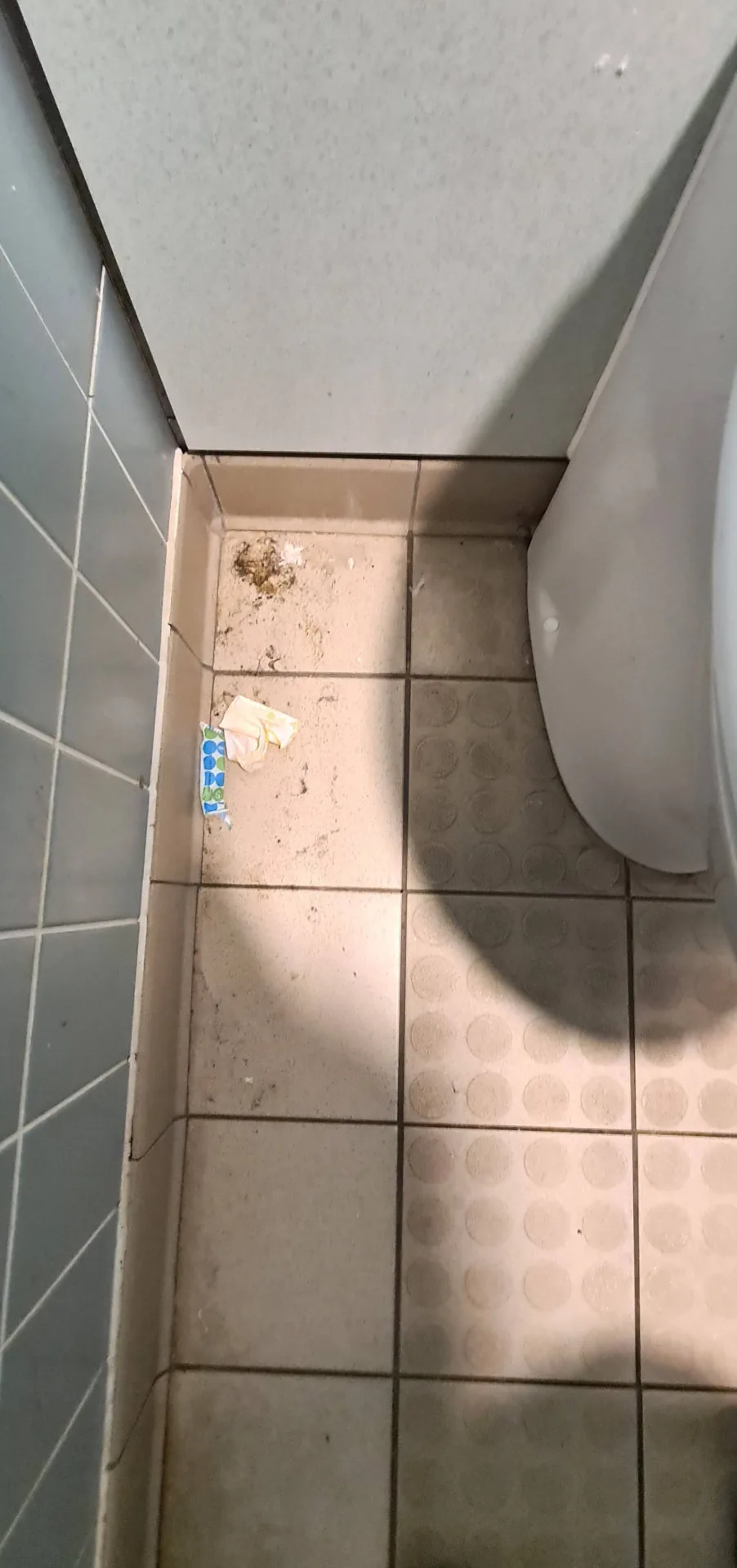
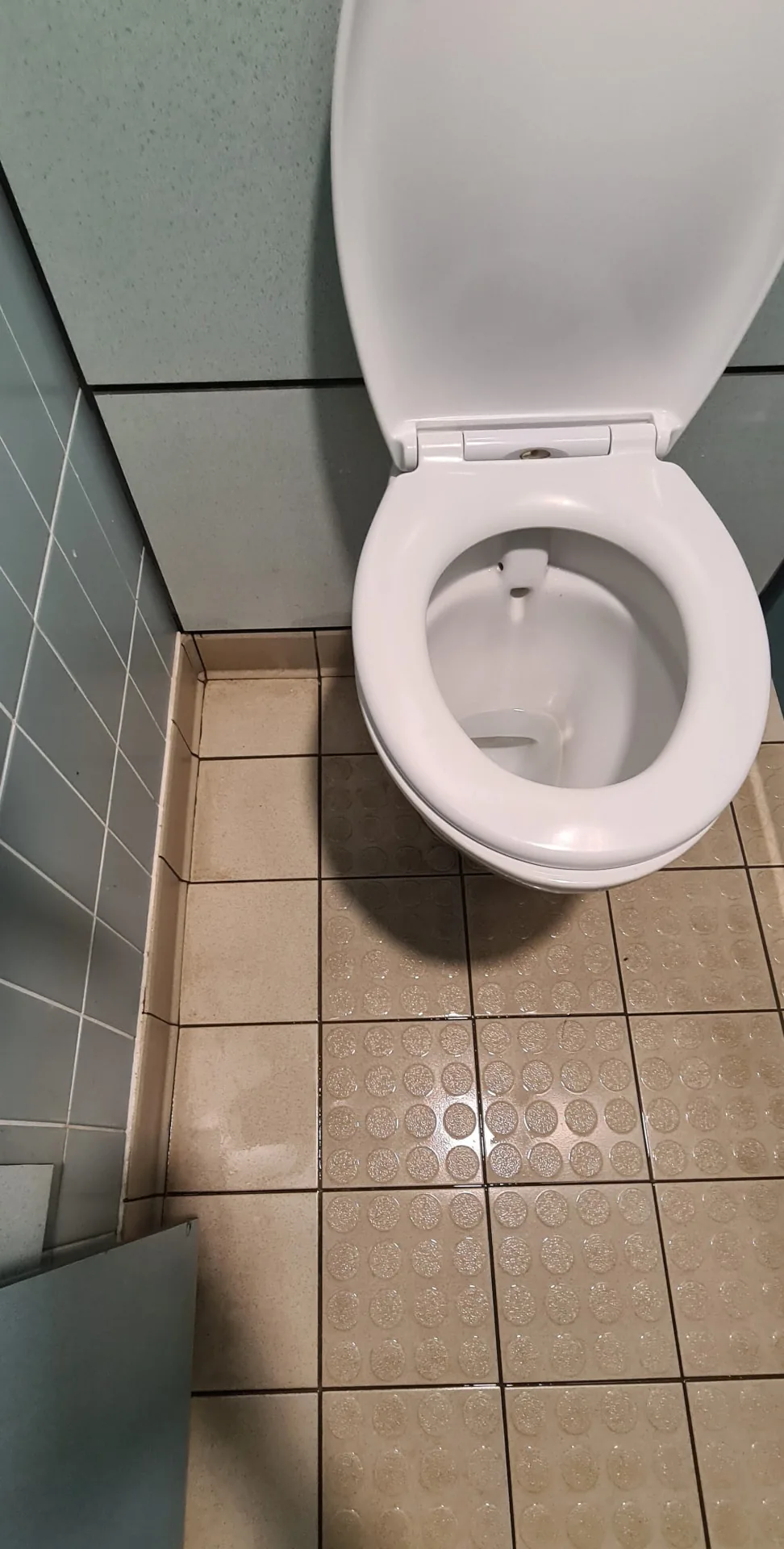
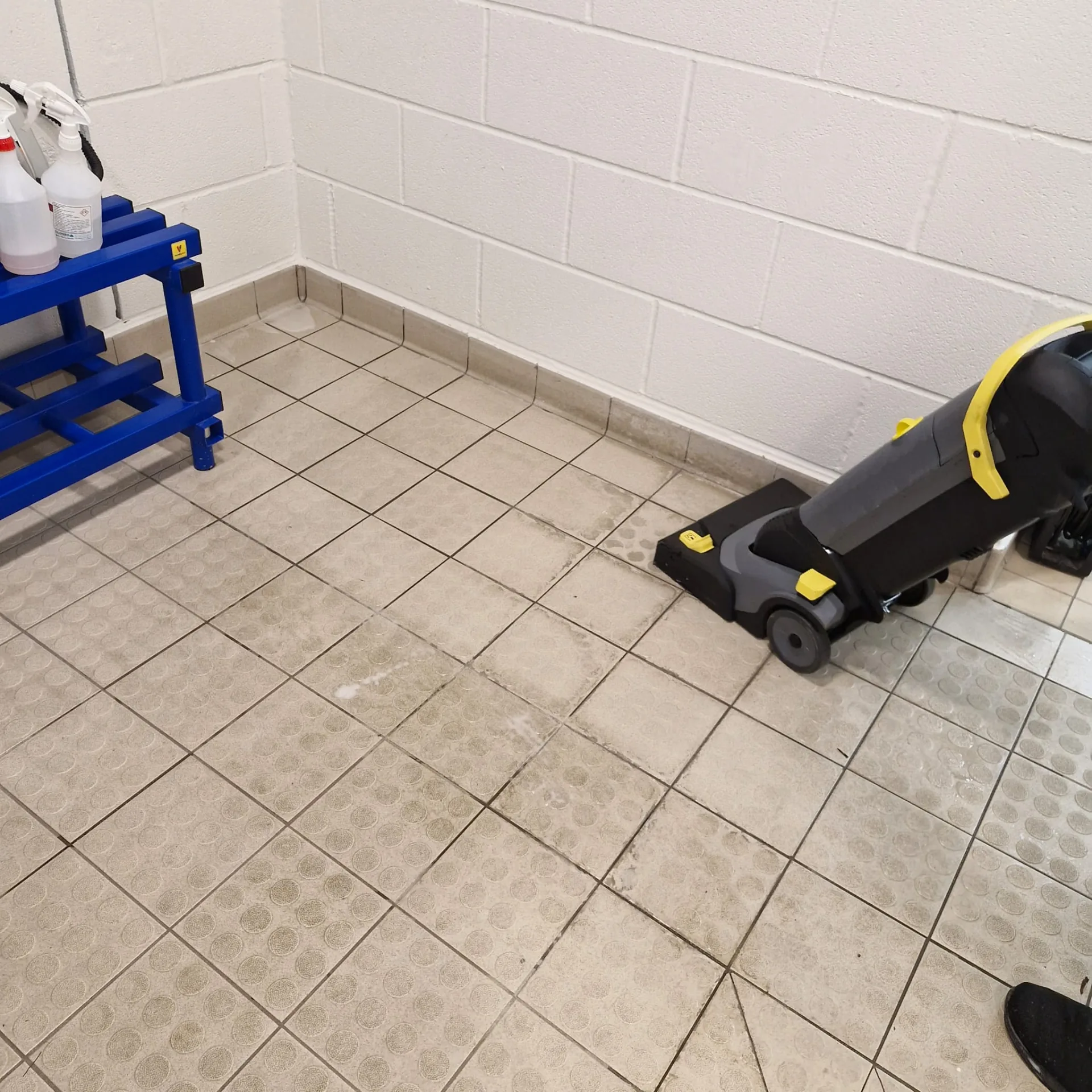
At St Margaret's School in Bushey, the sports centre changing rooms and toilets had built up grime that routine cleaning was never designed to remove. Machine scrubbing and poolside safe products cleared the floors, channels and water traps, so water drained freely and the rooms smelled fresh again. For this kind of reset, see our washroom deep cleaning service.
What do schools use to clean up vomit?
Every school and nursery should have a body fluid spill kit and staff who know how to use it. UKHSA advises cleaning up spills of vomit, urine, faeces and blood straight away, wearing gloves and an apron, using disposable paper towels or cloths, and keeping a spillage kit available. A safe routine looks like this:
- Move pupils away from the area and open a window if you can.
- Put on disposable gloves and an apron. Add eye protection if splashing is likely.
- Cover the spill with absorbent granules from the spill kit, or soak it up with disposable paper towels, then scoop it into a waste bag.
- Clean the area with a combined detergent and disinfectant that works against both bacteria and viruses, following the label. Cleaning with detergent first and then disinfecting is also acceptable.
- Bin the cloths, gloves and apron, tie the bag and wash your hands with liquid soap and warm water.
One important exception: some chlorine based disinfectants, such as NaDCC granules and tablets, must not be used on urine. Always check the product label first.
If a carpet is still marked once the spill has been cleaned up, a professional carpet clean will lift what is left.
Sickness bugs and norovirus: cleaning during an outbreak
Norovirus spreads quickly through schools and nurseries by hands, surfaces and shared toilets. Three points from the UKHSA guidance are worth knowing before the next outbreak.
- Hand gel is not enough. Alcohol hand gel does not work against the bugs that cause diarrhoea and vomiting, such as norovirus, so pupils and staff need to wash with liquid soap and warm water.
- Keep ill pupils and staff away for 48 hours. Anyone with diarrhoea or vomiting should stay away until at least 2 days after their symptoms have stopped.
- Call your health protection team if 2 or more linked people have similar symptoms, or there is an unusually high number of absences starting around the same time. The team may recommend enhanced or more frequent cleaning.
Enhanced cleaning means cleaning toilets and the surfaces hands touch most more often: door handles, toilet flushes, taps and shared equipment. The guidance focuses on hand washing, keeping ill people away and enhanced cleaning, so follow your health protection team's advice rather than assuming the school needs to close for a deep clean.
If your cleaning is contracted out, agree in advance how extra cleans will be arranged, so you are not trying to organise them on the day an outbreak starts.
How to keep a classroom clean
Classrooms are much easier to clean well when pupils, teachers and cleaners all play their part.
- Clear floors and desks at the end of the day. Chairs up on tables means the floor can be cleaned properly, not just around the furniture.
- Wipe shared equipment regularly. Keyboards, tablets, glue pots and maths resources are handled all day.
- Keep soft furnishings wipeable. UKHSA says soft furnishings should ideally have a wipeable surface, and fabric cushions and beanbags need regular washing.
- Watch the corners. Dust gathers behind radiators, under tray units and along skirting boards, where a quick mop never reaches.
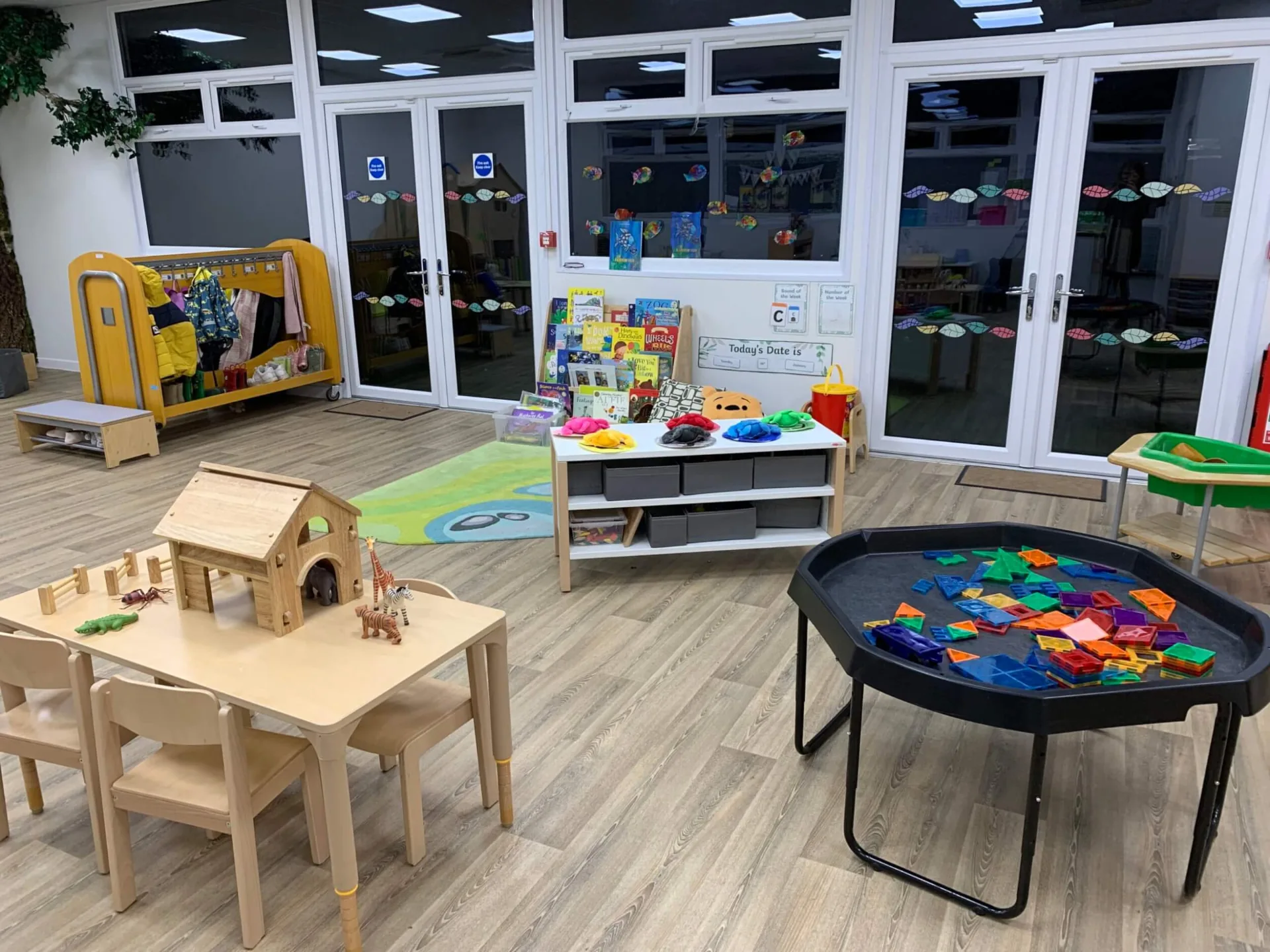
In nurseries and early years rooms, children sit, crawl and play on the floor and touch everything at their own height. When we deep cleaned Canopy Nurseries in Bricket Wood, the low tables, chairs, shelving and floors where children play got as much attention as the washrooms.
What is a deep clean in schools?
A school deep clean goes beyond the daily routine to remove the build up that regular cleaning cannot reach. Most schools book one in the summer holiday, with smaller jobs at half term. A thorough school deep clean usually covers:
- Hard floors: old polish stripped, floors machine scrubbed and fresh polish applied
- Washrooms and changing rooms: limescale, soap scum and body fats removed, with drains and water traps cleared
- Carpets: hot water extraction to lift ground in dirt and stains
- High level areas: lights, vents, cupboard tops and window frames
- Kitchens and staff rooms: appliances, cupboards and worktops degreased
- Behind and under furniture: everything moved so hidden floors and walls are cleaned
Floors make the most visible difference. At St Anthony's School, we stripped, deep cleaned and polished the main hall parquet, after earlier visits to restore the dining hall, corridors and a stairwell.
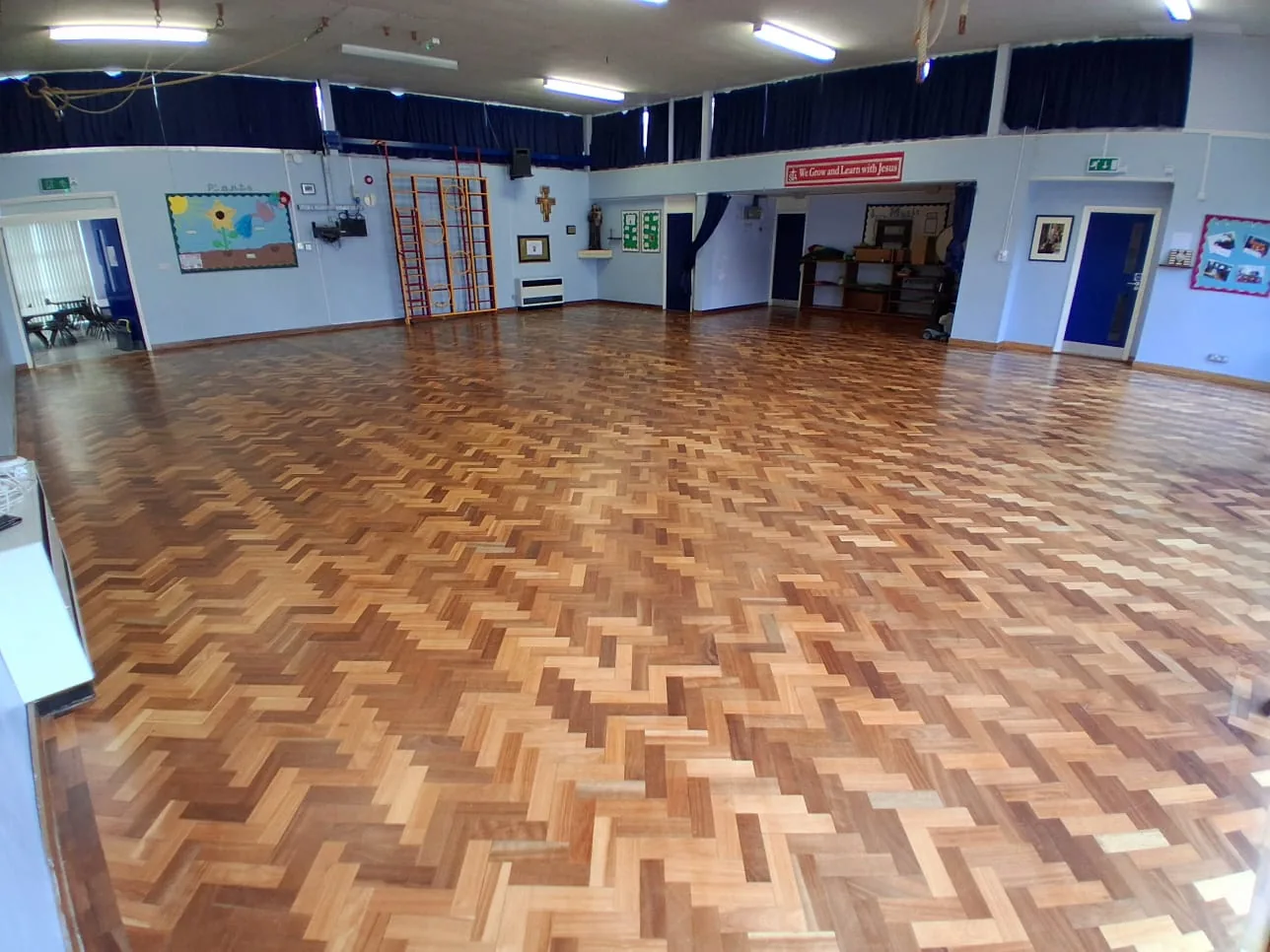
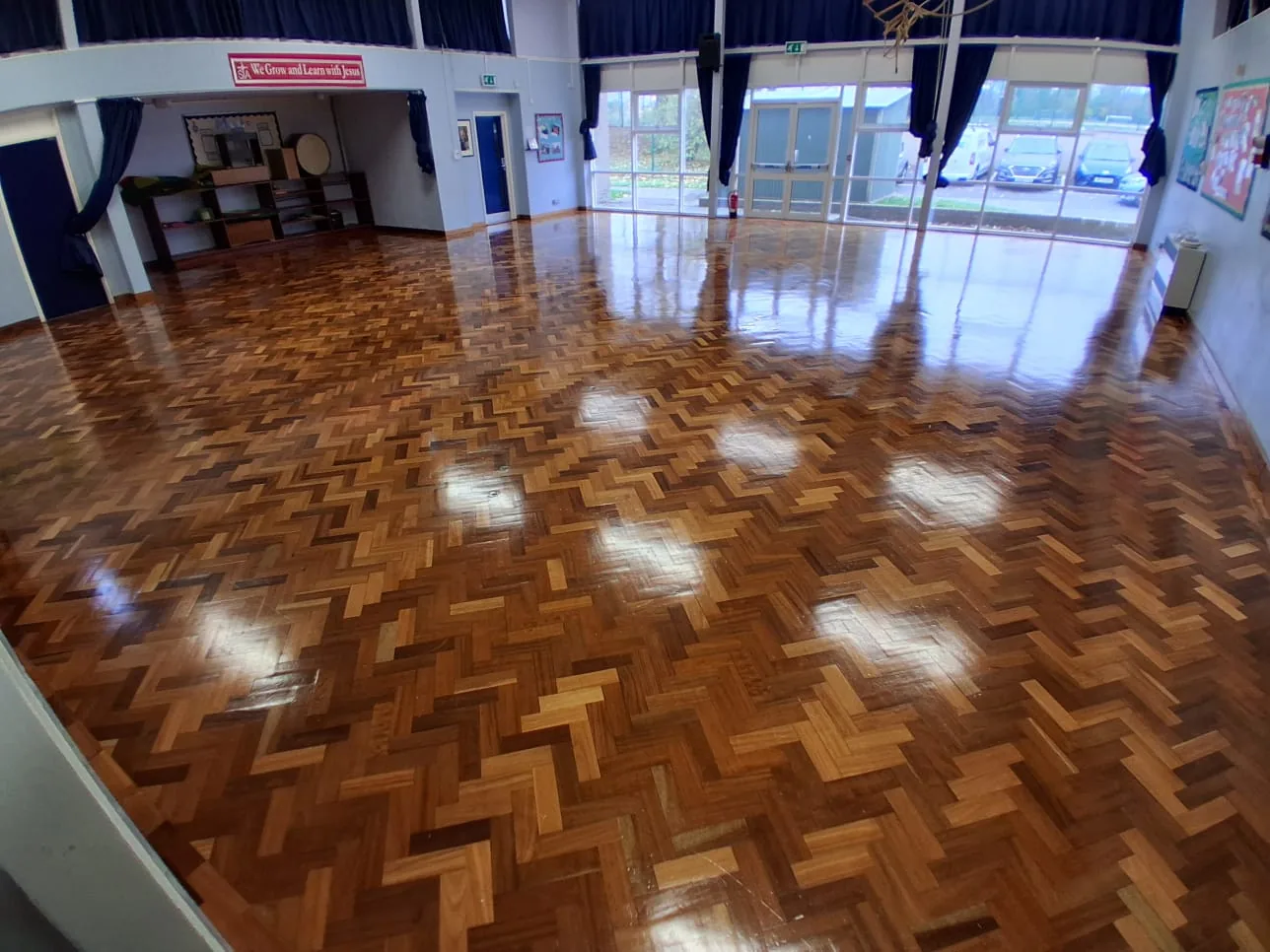
Book holiday work early. The summer break is the busiest time of year for school cleaning, and freshly polished floors need time to cure before pupils return. Our hard floor cleaning and polishing page explains the process.
What cleaning products do schools use?
Most school cleaning needs only a handful of products: a neutral detergent for general cleaning, a toilet and washroom cleaner, a disinfectant or combined detergent disinfectant for spills and outbreaks, and floor products suited to each type of floor. Store them in line with the Control of Substances Hazardous to Health (COSHH) regulations, locked away from pupils, with a safety data sheet for each one.
Many schools now prefer eco-friendly products. Our team uses EU Ecolabel certified products for routine cleaning, which clean effectively without strong chemical smells lingering in classrooms.
How to check your school is being cleaned properly
- Nominate one person to monitor cleaning standards, as UKHSA recommends, so problems have a clear owner.
- Give staff an easy way to report issues, such as a shared log or a single email address.
- Walk the building regularly, looking at toilets, floors, high surfaces and corners rather than just the obvious areas.
- Ask for evidence. A good contractor can show when each clean took place and puts problems right quickly. Our technicians clock in and out through Connecteam, and anything reported within 48 hours is put right free of charge.
Need help keeping your school clean?
Cleaníge provides contract school cleaning and holiday deep cleans for schools and nurseries across Watford, Hertfordshire, Bedfordshire and Buckinghamshire, with DBS checked technicians and cleaning planned around the school day.
Talk to the Cleaníge team
If you'd like to discuss your cleaning requirements or would like more information about our services. Send us a message through the contact form or email us directly and we'll come back with clear next steps.
Blog post at a glance
- Covers
- Toilets, sickness bugs, spills, classrooms and holiday deep cleans in schools
- Who it's for
- School business managers, site teams and nursery managers
- Good to know
- Alcohol hand gel does not kill norovirus, so soap and water matter
8 min
Read time
Nov 2026
Published