8 min read
How to Clean a Fabric Sofa: Cleaning Codes, Stains and When to Call a Professional
How to clean a fabric sofa at home: what W, S and X cleaning codes mean, step by step cleaning, common stains, steam cleaning and when to call a pro.
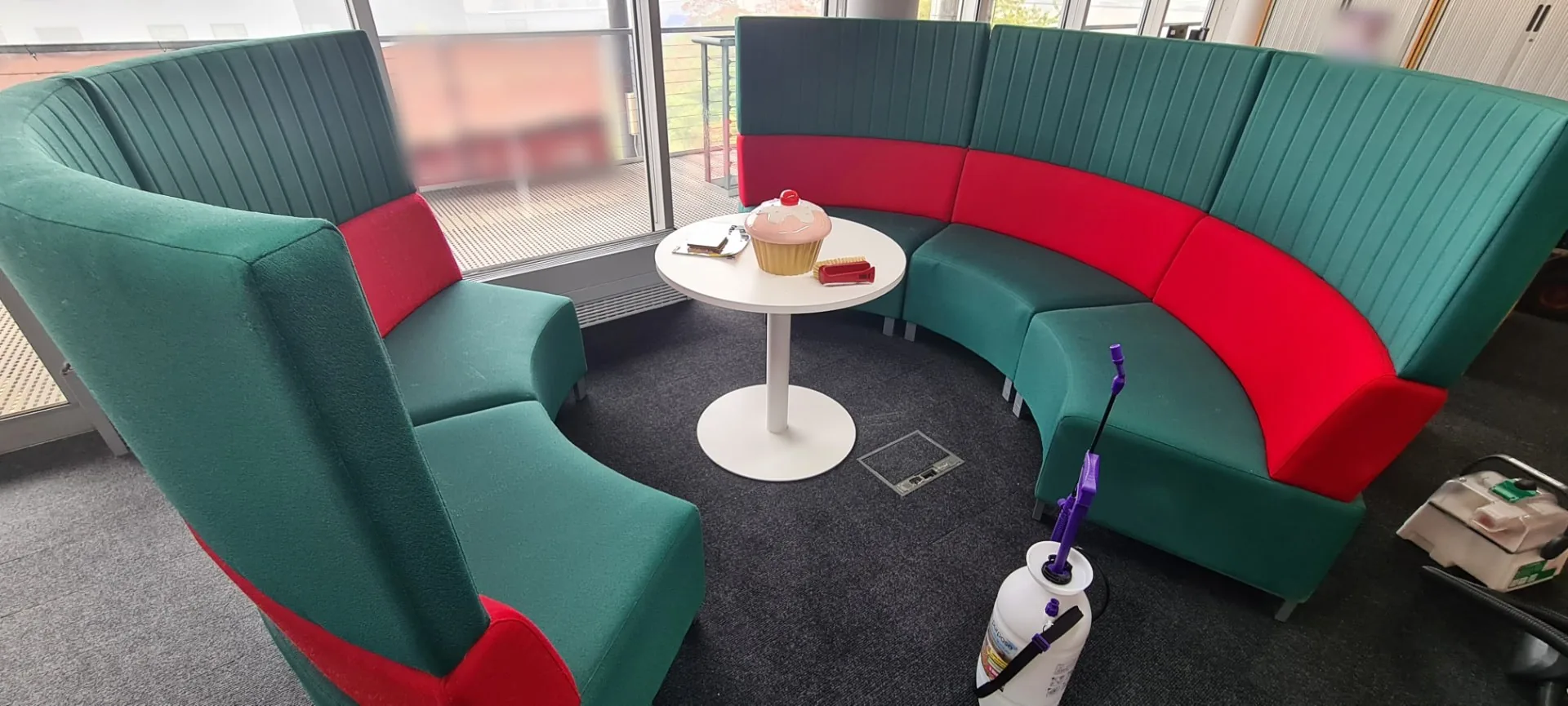
A fabric sofa takes more daily wear than almost anything else in a home or a staff room. Dust, body oils, crumbs, spills and pet hair all work their way into the fibres, and the seats and arms slowly darken. The good news is that most fabric sofas can be cleaned at home if you use the right method for the fabric. This guide explains how, and when it is better to call in a professional.
The short answer
- Check the cleaning code on the label so you know whether water is safe.
- Vacuum thoroughly with an upholstery brush and crevice tool, cushions off.
- Spot test your cleaner on a hidden area and let it dry.
- Clean with foam, not liquid, using a white cloth and working from the outside of a mark inwards.
- Blot, rinse lightly and air dry, then brush the fabric once it is dry.
Step 1: Check your sofa's cleaning code
Most sofas have a label under the seat cushions or beneath the frame. Many carry a letter code that tells you which cleaners are safe:
- W: water based cleaners are safe. You can use a water based upholstery shampoo or foam, without over wetting the fabric.
- S: solvent only. Do not use water. Spot clean with a water free dry cleaning solvent in a well ventilated room.
- WS or SW: either a mild water based cleaner or a mild solvent can be used. Testing first matters most here.
- X: vacuum or brush only. These fabrics should not be cleaned with water or solvents, so stains need a professional.
If there is no code, check the manufacturer's care guide or treat the fabric as delicate. Removable covers should only go in the washing machine if the label says so, and it is best to wash all the covers together so the colour stays even.
Step 2: Vacuum and brush
Take the cushions off and vacuum every surface with the upholstery brush, then use the crevice tool along seams, piping and down the sides where crumbs collect. On textured or pile fabrics such as velvet or chenille, brush gently in the direction of the pile first to loosen dust. Removing dry soil before you add any moisture stops it turning into muddy streaks.
Step 3: Spot test your cleaner
Whatever you use, test it on a hidden area such as the back of the sofa or under a cushion. Apply a little, blot with a white cloth and let it dry fully. If any colour transfers to the cloth or the fabric changes texture, stop and seek professional advice.
Step 4: Clean the fabric (W code sofas)
- Mix a few drops of mild washing up liquid into a bowl of warm water, or use an upholstery shampoo made for W coded fabrics, diluted as directed.
- Whisk the mixture until it foams and use mainly the foam. Foam lifts dirt without soaking through to the cushion filling.
- Apply it with a soft white cloth or upholstery brush, working from the outside edge of a mark towards the middle so it does not spread.
- Blot with a clean dry white cloth. Do not rub, which pushes dirt deeper and roughens the fibres.
- Lightly wipe over the area with a cloth dampened in clean water to remove soap residue, then blot again.
- Clean whole panels rather than tiny patches where you can, which helps avoid ring marks.
Step 5: Dry it properly
Open windows or run a fan, and let the sofa air dry before anyone sits on it. Avoid hairdryers and putting it close to radiators, as direct heat can shrink fabric and set any stain you have missed. Once dry, brush pile fabrics to lift them back up.
How to remove common sofa stains
For any spill, act quickly and blot rather than wipe. These tips assume a W or WS coded fabric:
- Tea and coffee: blot up as much as possible, then treat with the washing up liquid foam and blot until no more colour transfers.
- Red wine: blot immediately, dab with cold water, then use the foam method. Avoid hot water, which can set it.
- Grease and food: sprinkle bicarbonate of soda or cornflour to absorb the oil, leave for 15 minutes, vacuum, then treat with foam.
- Mud: let it dry completely, brush off as much as you can and vacuum before cleaning what is left.
- Pet accidents: blot, then use an enzyme cleaner suitable for upholstery to break down the odour, rather than just masking it.
- Ink: dab carefully with a little isopropyl alcohol on a white cloth after testing, never rubbing.
How to clean a fabric sofa naturally
Bicarbonate of soda is a gentle way to freshen a sofa. Sprinkle it evenly over a dry, vacuumed sofa, leave it for at least an hour to absorb odours, then vacuum it off thoroughly. A spray of one part white vinegar to two parts water can help with some marks on W coded synthetic fabrics, but always test first because vinegar is acidic and can affect some dyes and natural fibres.
Can you steam clean a fabric sofa?
A handheld steamer can help refresh many W coded synthetic fabrics, but it is not right for every sofa. Avoid steam on S and X coded fabrics, and take care with velvet, linen, silk and wool unless the manufacturer says it is safe. Never steam protein stains such as blood, milk or egg, because heat can set them permanently. Keep the steamer moving and do not let the fabric become soaked.
Mistakes that damage fabric sofas
- Over wetting. Soaking the fabric can leave water rings, brown marks on natural fibres, and damp in the filling that leads to odours or mould.
- Coloured cloths or paper towels that can transfer dye onto the fabric.
- Scrubbing hard, which frays fibres and spreads the stain.
- Bleach or strong household sprays, which can strip colour.
- Using water on an S or X coded fabric, which can cause permanent marking.
Cleaning office chairs and workplace seating
The same principles apply to fabric office chairs, reception sofas and break area seating, but workplace seating gets far heavier use. Vacuum the seats and backs regularly, wipe mesh chairs with a cloth and mild soapy water, and clean the arms, bases and wheels as well as the fabric. Where dozens of chairs need doing at once, a professional clean is usually quicker and gives a more even result.
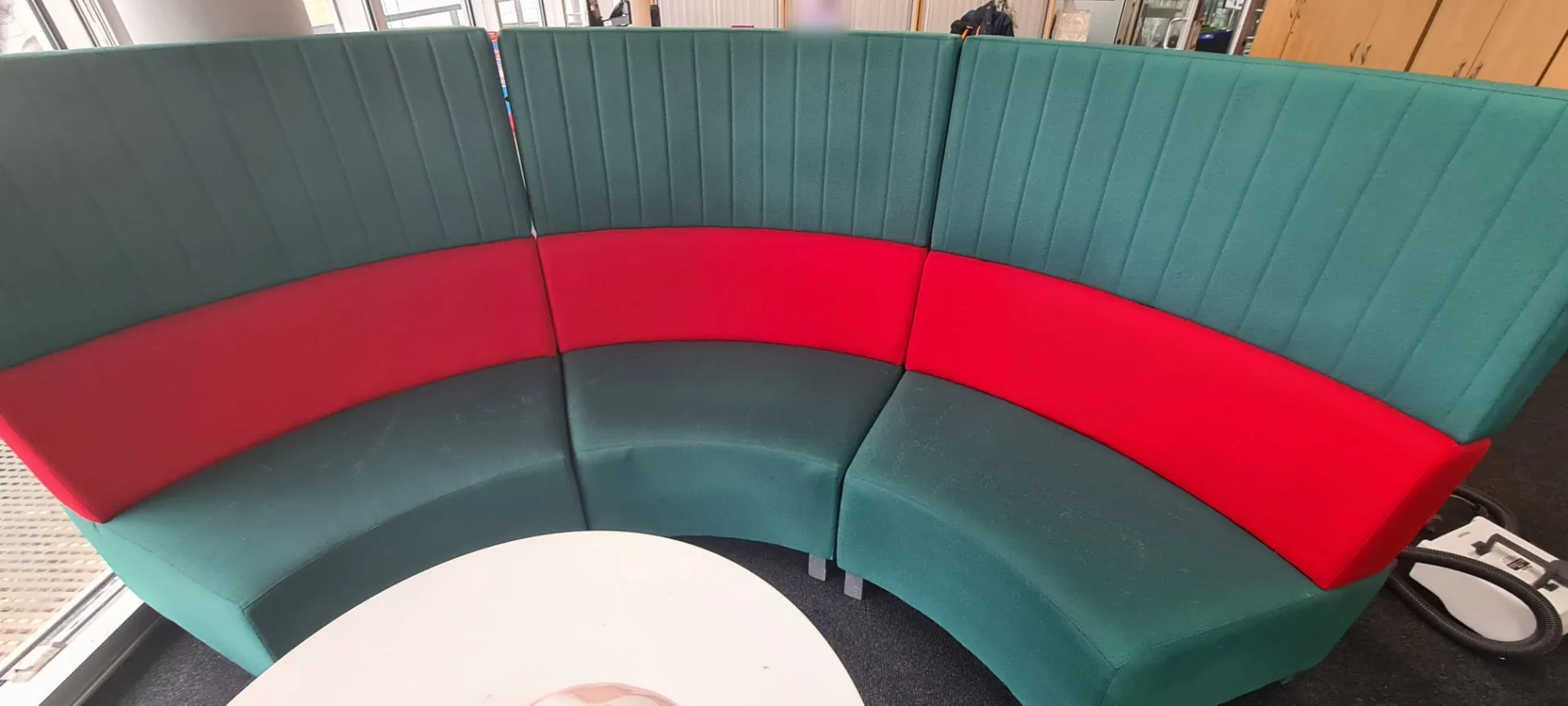
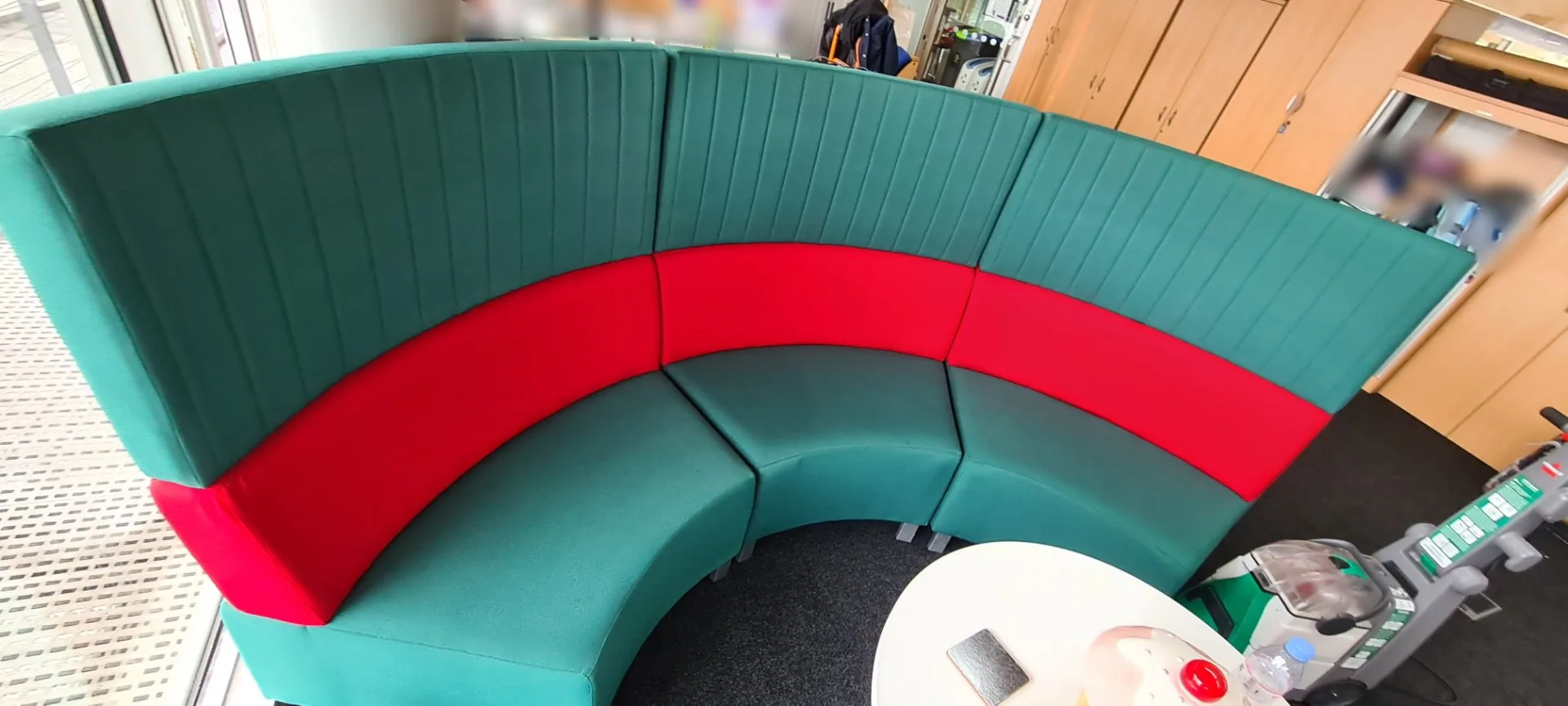
At Aspire Leisure Centre in Stanmore, two of our technicians cleaned more than 20 office chairs and a large modular sofa in a single visit, going beyond the fabric to clean the arms, feet and frames. Read the Aspire Leisure Centre case study to see the full job.
When to call a professional upholstery cleaner
- Your sofa is coded S or X, or has no label at all.
- The fabric is delicate, such as velvet, linen, silk or wool.
- Stains or odours have been there a long time or keep coming back.
- The whole sofa looks grubby rather than just one or two marks.
- You are moving out and want the furniture ready for end of tenancy checks.
Professional cleaning uses hot water extraction or low moisture methods matched to the fabric, so deep down soil is rinsed out and extracted rather than just moved around. A stain guard can then be applied to help future spills bead up so they are easier to blot away.
How often should a fabric sofa be cleaned?
- Vacuum weekly in busy homes, or at least monthly.
- Spot clean spills as soon as they happen.
- Professionally clean once or twice a year for sofas in heavy use, such as family homes with children or pets and busy staff rooms, and every 12 to 18 months for lighter use.
Sofa and upholstery cleaning in Watford and Hertfordshire
We clean sofas, armchairs, dining chairs, office chairs and break area seating for homes and businesses across Watford, St Albans, Hemel Hempstead, Rickmansworth and beyond. Carpet and upholstery cleaning starts from £100 + VAT, with an optional stain guard. Use our instant estimate for a guide price, or get in touch to tell us about your furniture.
Talk to the Cleaníge team
If you'd like to discuss your cleaning requirements or would like more information about our services. Send us a message through the contact form or email us directly and we'll come back with clear next steps.
Blog post at a glance
- Covers
- Cleaning codes, stain treatment and when to call a professional
- Who it's for
- Anyone with a fabric sofa
- You'll need
- The care label code, microfibre cloths and a hidden test patch
8 min
Read time
Nov 2026
Published